
How to Plan the Perfect Christmas Activities Across Generations
Some links on this blog may contain affiliate links. If you make a purchase through one of these links, I may earn a small commission at no extra cost to you. Thank you for supporting The Connected Years!
Christmas has a way of bringing family members together, but finding activities everyone genuinely enjoys can take some thought. Children may want excitement, games, and hands-on fun. Parents are often balancing shopping, cooking, hosting, and other holiday responsibilities. Grandparents and older relatives may prefer relaxed conversations, familiar traditions, or activities that allow everyone to spend time together comfortably.
That is why planning Christmas activities across generations requires more than filling a calendar with festive ideas. The goal is to create opportunities for different ages to connect without making anyone feel left out, exhausted, or pressured to participate.
Perhaps your children are excited to spend Christmas with their grandparents, but you are unsure what everyone can do together. Maybe your family has different interests, mobility needs, traditions, or expectations for the holiday. You might even be celebrating with relatives you rarely see throughout the year.
The good news is that meaningful Christmas experiences do not require an elaborate schedule or expensive outings. A shared recipe, a familiar Christmas song, a family story, or a relaxed afternoon playing games can bring generations closer.
With a little preparation and room for flexibility, you can create a Christmas that feels enjoyable for children, parents, grandparents, and other loved ones. Here is how to plan activities that make togetherness the heart of your family celebration.
Read this article on How to Spend Quality Time With Your Grandparents: 17 Meaningful Ideas to get more ideas.

How to Plan Christmas Activities Across Generations
Start With the People, Not the Activities
When planning Christmas activities across generations, it is tempting to begin by searching for crafts, games, outings, and festive entertainment. Yet the most successful plans usually begin with the people who will be participating.

Think about your family’s ages, personalities, interests, and energy levels. A preschooler may love decorating cookies, while a teenager might prefer making a playlist or recording family videos. A grandparent may enjoy sharing a traditional recipe, while another relative may feel happiest sitting nearby and watching everyone have fun.
These differences do not have to complicate your plans. Instead, they can help you choose activities that allow everyone to contribute in their own way.
Ask family members what they would enjoy doing during the holiday. Children can suggest their favourite games, while older relatives can share traditions they would like to revisit. Parents can identify practical limits, such as travel time, available space, and the responsibilities already planned for Christmas Day.
You do not need every person to love every activity. Aim for a few shared experiences that give everyone something to enjoy.
It also helps to consider what Christmas means to your family. Some families value religious traditions and church services, while others focus on food, music, gift-giving, or spending time with relatives. Many combine several of these elements.
Understanding these preferences makes it easier to plan a celebration that feels personal rather than copying someone else’s perfect Christmas.
Create a Christmas Plan That Leaves Room to Breathe
A thoughtful plan gives your family something to look forward to without turning the holiday into a demanding schedule.
Start by looking at the days when everyone is available. If relatives are travelling from different places, consider whether the main gathering should happen on Christmas Eve, Christmas Day, Boxing Day, or another convenient date.
Next, think about how much time your family realistically has. A household hosting a large Christmas dinner may not have the energy for several organised activities. On the other hand, a family spending a quiet afternoon together might enjoy a longer craft session or a leisurely outing.
Try spreading activities across the festive period instead of squeezing everything into one day. You could decorate together before Christmas, share a family recipe during the holiday, and arrange a relaxed outing when everyone’s schedule allows.
This approach also helps children manage their excitement. They can look forward to different experiences without spending the entire holiday rushing between them.

Build breaks into your plans, especially when young children and older relatives will be participating. People may need time to eat, rest, take medication, attend to personal needs, or simply enjoy a quiet moment.
Most importantly, allow activities to run longer or finish earlier than expected. If everyone is enjoying a conversation around the table, there is no reason to interrupt it because the next activity is scheduled.
A good Christmas plan should support connection, not compete with it.
Choose Activities That Give Every Generation a Role
The easiest way to bring different generations together is to choose experiences where people can contribute according to their interests and abilities.
Activities often work best when nobody needs to be the fastest, strongest, or most creative person in the room. Instead, each participant has a meaningful part to play.
Make Christmas Preparations a Shared Experience

Christmas preparations can become memorable family moments when they are treated as opportunities to spend time together.
Children can arrange decorations, place unbreakable ornaments on the lower branches of the tree, or help prepare simple table decorations. Older relatives can explain the meaning behind treasured ornaments or describe how their families decorated their homes in previous years.
Parents can handle tasks requiring more supervision while inviting everyone else to contribute where possible.
You might also create a family decorating tradition. Each person could choose an ornament that represents something important from the year. Over time, the collection becomes a visual record of family milestones, favourite memories, and changing interests.
For another meaningful touch, ask children to help make handmade Christmas cards for relatives who cannot attend the gathering. Older family members can share ideas, write messages, or help children choose words that express their appreciation.
These preparations do not need to look professionally styled. Their value comes from the time people spend creating something together.
Bring Everyone Into the Kitchen
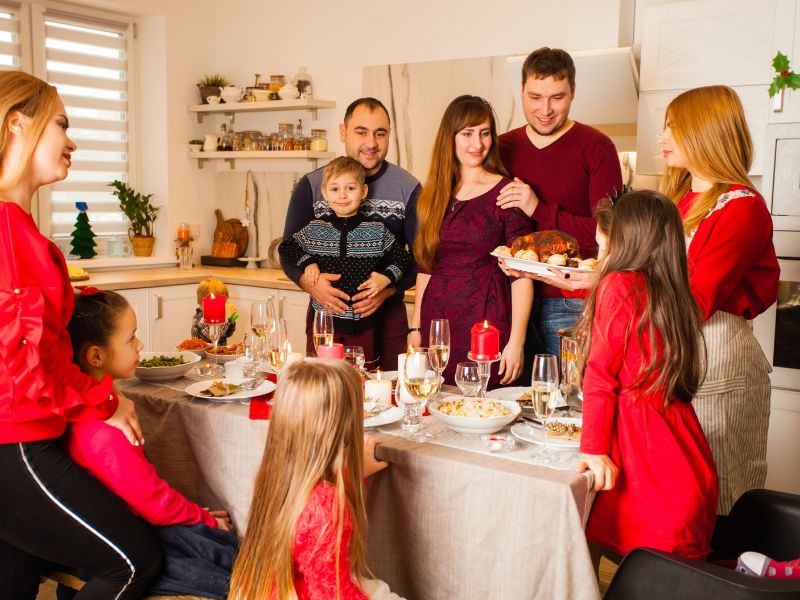
Food can be a natural meeting point for generations because recipes often carry memories, cultural meaning, and family history.
Choose a recipe that suits the group’s abilities and available time. It might be a traditional Christmas dish, a family dessert, homemade biscuits, or a simple snack everyone enjoys.
An older relative can explain how a dish was prepared years ago. Children can wash suitable ingredients, stir mixtures with supervision, decorate finished treats, or arrange food on serving plates. Teenagers might manage a playlist or help record the recipe for future family gatherings.
If a treasured recipe exists only in someone’s memory, use the opportunity to write it down. Ask about ingredient substitutions, cooking methods, and the occasions when the family traditionally served it.
The conversation may reveal stories that younger relatives have never heard.
Keep the kitchen experience manageable by preparing ingredients beforehand and assigning tasks that suit each participant. Adults should supervise children around hot surfaces, sharp utensils, and electrical appliances.
Consider allergies, dietary requirements, swallowing difficulties, and other individual needs when choosing ingredients and serving food.
If cooking is too demanding for some family members, they can still participate by sharing stories, choosing music, setting the table, or tasting suitable finished dishes.
The purpose is not to produce a perfect Christmas meal. It is to make the process of preparing and sharing food part of the celebration.
Make Space for Games Everyone Can Enjoy

Family games can help people connect when conversation feels difficult or relatives are still getting to know one another.
The trick is to choose games that accommodate different ages and abilities. Simple trivia, picture guessing, storytelling prompts, word games, matching games, and cooperative challenges can work well when adapted to the group.
For example, a family trivia game could include questions about Christmas traditions, favourite family meals, memorable holidays, or amusing events from previous gatherings.
Children might enjoy guessing old family photographs, while older relatives can explain the stories behind them. Keep questions friendly and avoid using private, embarrassing, or painful memories as entertainment.
You can also create a collaborative challenge in which the family works together rather than competing against one another. Participants might invent a Christmas story, build a decoration, or choose a favourite family song.
Think carefully about the rules and pace. Small children may need simpler questions, while relatives with hearing, vision, or memory difficulties may appreciate larger print, visual clues, repeated instructions, or extra time.
Nobody should feel embarrassed about not knowing an answer or needing help.
When games are designed around participation rather than winning, they can help different generations relax and enjoy one another’s company.
Make Family Stories Part of Christmas

One of the most meaningful Christmas experiences may not involve decorations, gifts, or games at all. It may begin when someone asks an older relative what Christmas was like during their childhood.
Family stories give younger generations a chance to understand the people they love beyond their current roles. Children may discover what their grandparents enjoyed as children, what their parents found exciting about Christmas, or how family traditions have changed over the years.
Rather than turning the conversation into a formal interview, introduce questions naturally during a meal, a walk, or a quiet afternoon together.
You could ask what Christmas food someone remembers most fondly, which family member made everyone laugh, or what a memorable holiday looked like when they were young.
Let the conversation move in its own direction. Some relatives may enjoy telling detailed stories, while others might prefer sharing a photograph or remembering a favourite song.
You can also invite younger family members to contribute. Ask children what they are excited about this Christmas or let teenagers describe a favourite memory from the past year.
This creates an exchange rather than a one-sided storytelling session.
If everyone agrees, record selected stories or write them in a family memory book. Label photographs with names, dates, and the stories people want to preserve. These small records can become valuable keepsakes as the family grows and changes.
Be sensitive when discussing the past. Christmas memories can bring happiness, but they can also remind people of loved ones who have died, difficult circumstances, or family changes. Let relatives decide what they feel comfortable sharing.
The aim is to make space for meaningful conversation, not to force anyone to revisit painful experiences.
Balance Indoor Activities With Time Outside the House

Not every family wants to spend the entire festive period indoors. A carefully chosen outing can give everyone a change of scenery and create a shared memory beyond the family home.
The best destination depends on your location, budget, weather, transport arrangements, and the needs of your group.
A visit to see Christmas lights can be a simple way to enjoy the season together. Families might take an evening drive, walk through a decorated neighbourhood, or visit a public display. Children can point out their favourite decorations while adults share stories about memorable holiday outings.
If the family prefers daytime activities, consider a botanical garden, a local museum, a Christmas market, a community concert, or a familiar park. A visit to a favourite restaurant or café can also feel special without requiring extensive planning.
Before choosing a destination, check opening hours, ticket prices, accessibility, parking, seating, toilet facilities, and expected crowds. Contact the venue directly if you need information about wheelchair access or other accommodations.
Consider the length of the outing, too. A destination that requires hours of walking may not suit every participant. A shorter visit with opportunities to sit down can be more enjoyable for the whole group.
Weather deserves attention, particularly when the family includes young children or relatives who may be sensitive to heat, cold, or prolonged exposure outdoors.
If travel is expensive or difficult, you can create a special experience closer to home. Walk around your neighbourhood, visit a nearby community event, or enjoy a festive picnic in a familiar outdoor space.
What matters most is choosing an outing that allows the family to enjoy the experience together rather than worrying about keeping up with a demanding itinerary.
Adapt Christmas Activities to Different Needs
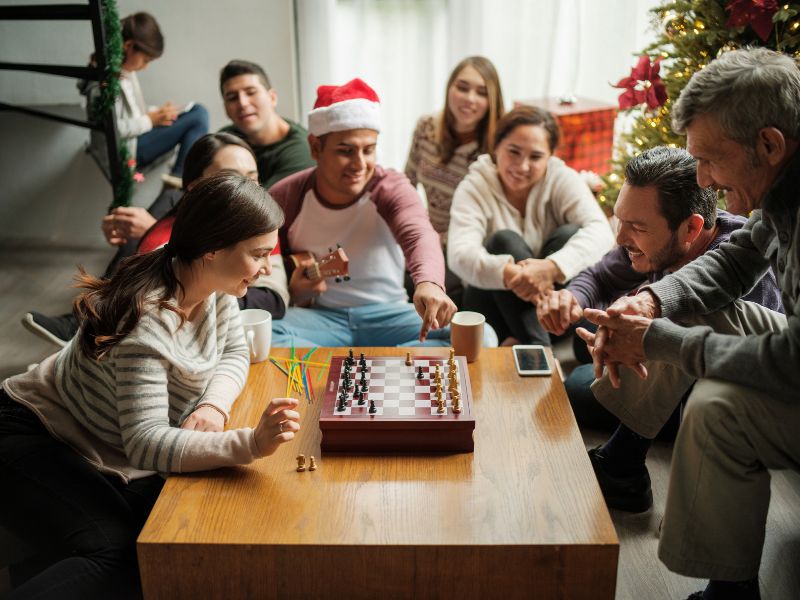
A multigenerational Christmas gathering may include toddlers, teenagers, adults, older relatives, and people with different physical or sensory needs. Planning with these differences in mind helps everyone feel welcome.
Start by considering comfort. Arrange enough seating, provide opportunities to rest, and avoid expecting everyone to remain in one place for long periods.
If an activity involves small craft pieces, scissors, hot glue, or other potentially hazardous materials, prepare a safer alternative for younger children. Keep small objects away from children who may put them in their mouths, and supervise age-appropriate activities.
For relatives with limited mobility, choose accessible routes and avoid making participation dependent on standing, bending, or walking for long periods. Someone who cannot decorate the tree can still choose ornaments or guide another family member.
Consider sensory preferences as well. Loud music, crowded rooms, flashing lights, and several simultaneous conversations can overwhelm some people. A quieter room or a calmer activity may help them participate comfortably.
Communication matters, too. Speak clearly, reduce background noise where possible, and provide written instructions for games when useful. Allow people time to respond instead of rushing to fill every silence.
Not everyone will want to participate in every activity. Some relatives may prefer to observe, have a one-to-one conversation, or take a break. Give them that freedom without making them feel guilty.
Planning for different needs is not about making Christmas complicated. It is about removing unnecessary barriers so more people can enjoy being together.
Keep Christmas Traditions Meaningful Without Making Them Obligations
Family traditions can give Christmas a familiar rhythm. They might include attending a religious service, preparing a special meal, watching a favourite film, exchanging handwritten cards, or taking a family photograph.
Some traditions are passed down through generations, while others begin with a spontaneous moment that everyone enjoys.
When planning your celebration, talk about which traditions family members genuinely want to continue. A ritual that once brought everyone joy may no longer suit the family’s current circumstances. Children may have grown older, relatives may live farther away, or someone’s needs may have changed.
There is no need to preserve every tradition simply because it has always existed.
Instead, look for ways to adapt meaningful customs. A large family dinner might become a smaller lunch. An elaborate baking tradition could be simplified to one favourite recipe. A Christmas Eve gathering could move to another date when more relatives are available.
You can also invite younger family members to introduce new ideas. Let them choose a song, suggest a game, create a decoration, or propose a tradition they would like to repeat next year.
Older relatives can share what matters most to them, while younger family members help shape how those traditions continue.
The result does not need to look exactly like Christmas did in previous decades. A living family tradition can change while retaining its meaning.
Most importantly, avoid making participation a test of love or loyalty. Family members may have work commitments, financial limitations, travel difficulties, or other responsibilities. A thoughtful message or a separate visit can still make someone feel remembered.
Plan for Relatives Who Cannot Be There in Person

Sometimes, distance, illness, work, travel costs, or other circumstances prevent family members from joining the main Christmas gathering.
That does not mean they need to be excluded from the family’s shared experiences.
Arrange a video call at a time that works across different schedules. Rather than simply placing a phone in the middle of a noisy room, choose a quiet moment when everyone can hear and respond.
Children could show a grandparent their decorations, introduce a handmade card, or explain a game they have been enjoying. An older relative could share a favourite Christmas story or watch family members prepare a recipe.
If live calls are difficult, exchange short voice messages, photographs, or recorded greetings. A family member who cannot manage a long video call may still enjoy receiving a cheerful message from the children.
You can also share a digital photo album after the celebration. Include captions that explain what happened, rather than sending a large collection of photographs without context.
Remember to ask permission before sharing other people’s photographs or recordings, especially when posting them online.
For families separated by time zones, consider arranging a smaller celebration on another day. Christmas connection does not have to happen at precisely the same time for everyone.
These thoughtful adjustments help distant relatives remain part of family life, even when they cannot physically join the gathering.
Make the Gathering Easier for the Person Hosting
A Christmas plan can sound wonderful on paper but become exhausting if one person must organise every detail.
If you are hosting, remember that your enjoyment matters, too. You should not have to spend the entire celebration cooking, cleaning, serving, and managing activities while everyone else relaxes.
Share responsibilities before the holiday. Relatives can bring suitable dishes, help prepare decorations, organise a game, or take responsibility for clearing the table.
Keep the menu realistic and choose activities that do not require constant supervision from the host. Preparing craft materials or setting up games in advance can make it easier for others to participate independently.
It may also help to choose one main shared experience instead of planning entertainment for every hour. When people are comfortable, conversation and spontaneous moments often fill the gaps naturally.
Set expectations early if the gathering has practical limits. Explain arrival times, available space, meal arrangements, or any requests that will help the day run smoothly.
If hosting is too demanding this year, consider sharing the responsibility or meeting somewhere more manageable. A shorter gathering can be just as meaningful as an all-day celebration.
The aim is not to create a perfect event for everyone else. It is to create an environment where the whole family, including the host, has room to enjoy the occasion.
Capture the Memories Without Spending the Entire Day Taking Photos

Photographs can help preserve a family’s Christmas, but they should not become the main event.
Choose a few natural moments to document. You might photograph the family preparing food, decorating together, opening a memory book, or sitting around the table.
Invite family members to share the photographs they take, provided everyone is comfortable with the images being saved or shared.
You could also create a simple Christmas memory page. Include a favourite photograph, the recipe everyone prepared, a funny moment, or something each person enjoyed most about the gathering.
For children, drawing a picture of their favourite moment can be just as meaningful as taking a photograph. Older relatives might contribute a short memory or a handwritten message.
Store these keepsakes together so you can revisit them in future years. Over time, the collection can show how family members have grown, which traditions have continued, and how celebrations have changed.
Still, remember to put the camera away sometimes. Not every conversation, meal, or moment needs to be recorded.
Some of the most meaningful memories are the ones people experience fully before talking about them later.
What If Your Family Has Different Christmas Expectations?
Even with thoughtful planning, relatives may disagree about how Christmas should look.
One person may want a busy house filled with activities, while another prefers a quiet gathering. Some family members may prioritise elaborate meals and decorations, while others care most about spending relaxed time together.
These differences are easier to manage when expectations are discussed before the holiday.
Ask what matters most to each person, then identify the experiences that are realistic for everyone. You may not be able to include every suggestion, but you can look for shared priorities.
If some relatives want energetic games while others prefer quieter activities, allow the gathering to include both. A craft table or game can run alongside a quieter conversation area.
Financial expectations may require particular care. Agree on a comfortable budget for gifts, outings, and food instead of assuming everyone can afford the same arrangements.
Family relationships can also be complicated. Christmas may bring together relatives who rarely see each other or who have unresolved disagreements. Avoid forcing conversations, photographs, games, or physical affection that make someone uncomfortable.
A warm celebration does not require every relationship to be perfect. It requires respect, realistic expectations, and space for people to participate in ways that feel comfortable.
When disagreements arise, return to the purpose of the gathering: sharing time in a way that feels meaningful and manageable.
Let the Best Moments Become Next Year’s Traditions
After Christmas, take a little time to reflect on what your family enjoyed. You might ask which activity made everyone laugh, which meal people would like to prepare again, or what they would change next year. Children can share their favorite moments, while older relatives can suggest traditions they would love to continue.
Notice which activities encouraged conversation and which felt unnecessarily stressful. If an outing required too much travel, choose something closer to home next time. If a simple game brought everyone together, consider making it a regular part of the celebration.
You do not need to turn every enjoyable moment into an annual tradition. Let the ideas that feel natural return, and allow others to remain lovely memories from one particular Christmas.
Keeping a brief note or adding photographs to a family album can help you remember what worked. It also gives everyone a starting point when planning the next holiday.
Over time, your family’s Christmas may develop its own character. Some traditions will stay familiar, while others will change as children grow and circumstances shift.
That flexibility is part of what makes family traditions meaningful. They belong to the people who create them, not to a fixed schedule or a perfect image of Christmas.
Final Thoughts: How to Plan Christmas Activities Across Generations
Planning Christmas activities across generations is ultimately about helping family members enjoy one another’s company.
The most memorable celebration may include a shared meal, a favourite family story, a relaxed game, a neighbourhood outing, or a video call with someone who lives far away. These experiences do not need to be elaborate to make people feel connected.
Start with your family’s needs, make room for different interests, and plan activities that allow everyone to contribute comfortably. Share responsibilities, respect personal boundaries, and leave enough time for unplanned moments.
Above all, remember that Christmas does not have to unfold perfectly to be meaningful.
The laughter around the kitchen table, the story a grandparent tells for the first time, and the quiet moment spent together after dinner may become the memories your family treasures most.
This year, choose connection over pressure. Let your Christmas plans bring generations closer, one shared moment at a time.


This is a sample comment. Lorem ipsum dolor sit amet, consectetur adipiscing elit. Sed consectetur mollis posuere. Maecenas quis felis sit amet augue dictum mauris. Phasellus tempor nisi sem, id ultrices nibh ultrices id.
Here is another comment! Lorem ipsum dolor sit amet, consectetur adipiscing elit.
This is a nested reply.
Here is a nested reply with more text. Lorem ipsum dolor sit amet, consectetur adipiscing elit. Sed consectetur mollis posuere. Maecenas quis felis sit amet augue dictum mauris. Phasellus tempor nisi sem, id ultrices nibh ultrices id.